
When someone is unsure of the way home, help them reach a familiar person
A person may ask for help without remembering a family member’s number or being able to explain where they need to go. A configured TapHelp tag lets a helper find the agreed contact page and choose to call.
The problem behind the image
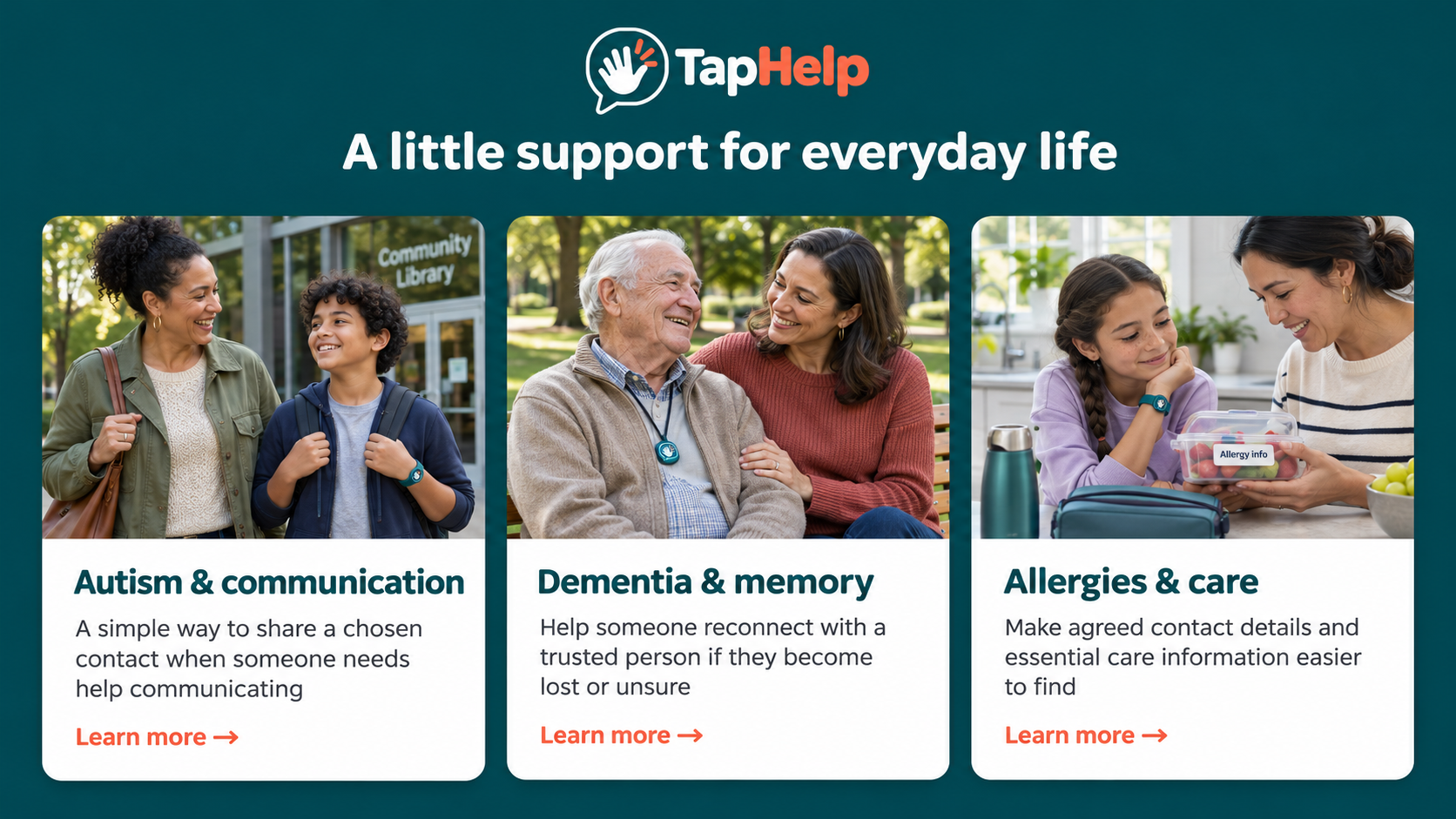
The older man and his companion represent a familiar connection. Away from that companion, someone living with dementia may become unsure of their location or how to contact family. A well-meaning shop assistant or bystander may want to help but have no reliable number to use.
How TapHelp helps in that moment
With permission wherever possible, the helper brings a compatible smartphone close to the wearer’s bracelet or pendant. They open the link to the configured page, see the agreed contact and select the call button. The wearer does not have to remember a number, navigate a phone or explain their full history.
What happens after the call
The family member or agreed supporter can speak with the helper and discuss an appropriate next step. A familiar voice may also help the wearer understand who is assisting them. The tag supplies a route to contact; it cannot ensure someone answers or arrange transport or care by itself.
Make the connection useful
Involve the wearer in decisions as much as possible. Agree who is willing to receive calls, what details should be visible and what to do if the contact does not answer. Check the link and phone number regularly as part of the person’s wider support arrangements.
Understand what the tag does
TapHelp is not a GPS tracker. It does not prevent a person becoming lost, locate them remotely or alert family automatically. Its role begins when someone notices the tag, uses a phone and opens the contact page. Continue existing safer-walking and emergency arrangements.