
When words are difficult, make the right contact easier to find
If someone needs help but cannot explain who to call, the person beside them may not know where to start. A configured TapHelp tag gives that helper a direct route to an agreed contact — without asking the wearer to recall or say a phone number.
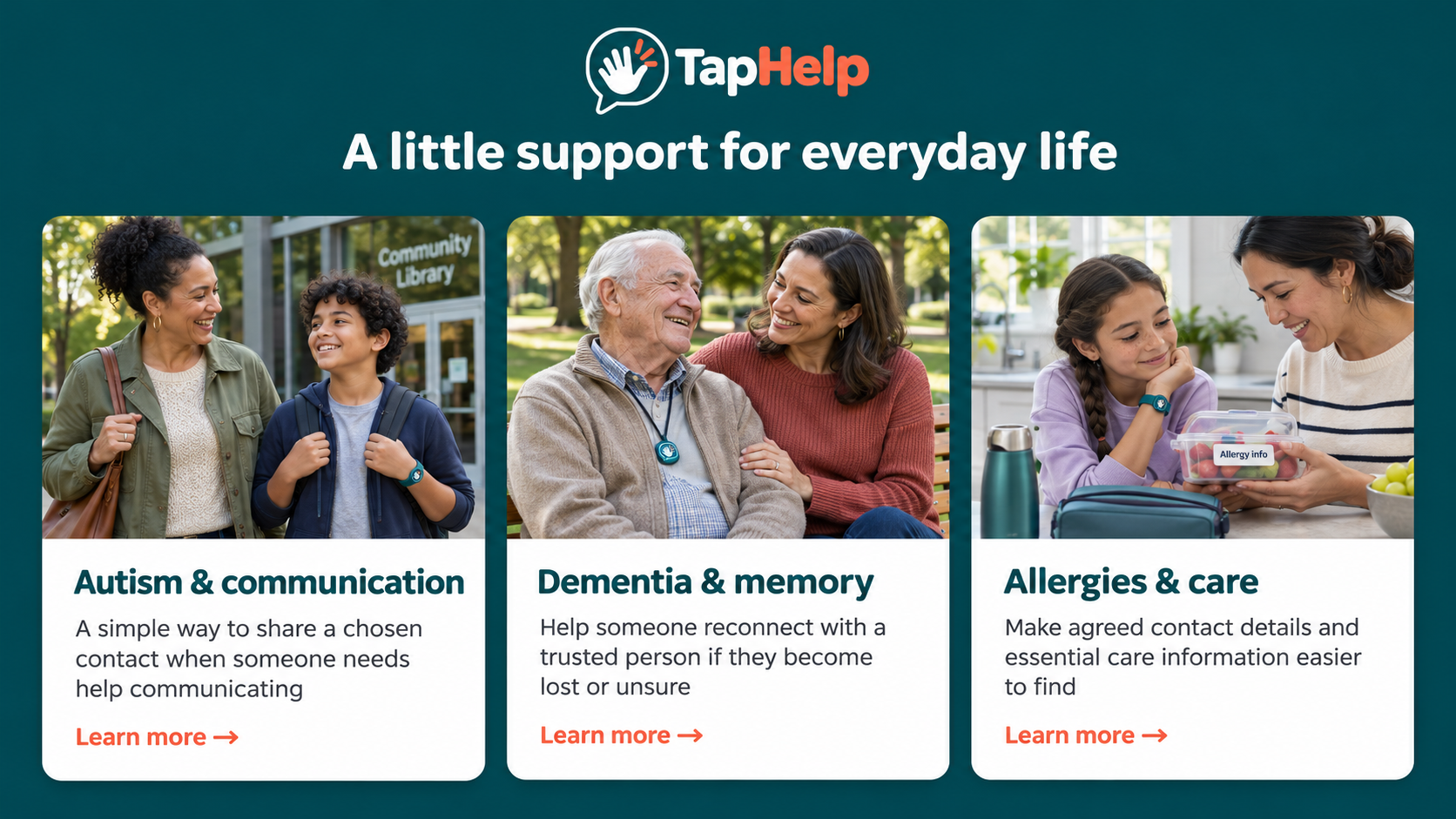
The problem behind the image
A child outside a library or school may need to reach a parent after becoming separated or feeling overwhelmed. Communication needs vary: some autistic people use speech, some use other methods, and some find speech harder in particular situations. The problem TapHelp addresses is the missing contact information, not autism itself.
How TapHelp helps in that moment
A teacher, staff member or bystander asks before using the tag wherever possible. They bring their compatible phone close to the bracelet or pendant, open the link and view the configured contact page. They can then select the contact number and confirm the call on their phone. The wearer does not need to explain the number or have a phone of their own.
What the familiar person can add
A parent or agreed supporter may help explain how the person prefers to communicate or arrange the next step. That gives the helper someone familiar to speak with instead of guessing. Reaching a contact depends on phone reception and whether that person answers; TapHelp does not guarantee a response.
Agree the information before it is needed
Choose a willing contact and decide what information a helper needs to see. A preferred name and contact number may be enough. If a communication note is included on the linked page, keep it brief and agreed with the person or authorised decision maker. A diagnosis does not need to be displayed.
Keep the person at the centre
Show the wearer how their tag is used, respect their preferred communication method and practise together. TapHelp provides a contact route; it does not identify distress, prevent separation or replace a person’s existing support arrangements.